Green Computing in Big Data Clusters: Technologies and Practices for Reducing Energy Consumption

Aug 26, 2025 By

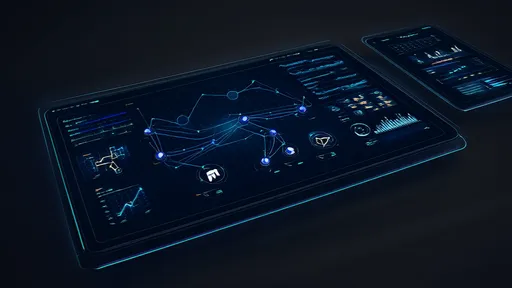
As global data consumption continues its exponential rise, the environmental footprint of massive data centers and computing clusters has become impossible to ignore. The push toward green computing in big data environments is no longer a niche concern but a central operational and ethical imperative for organizations worldwide. The convergence of technological innovation, economic pressure, and regulatory frameworks is driving a profound shift in how we power, cool, and manage the engines of our digital world.

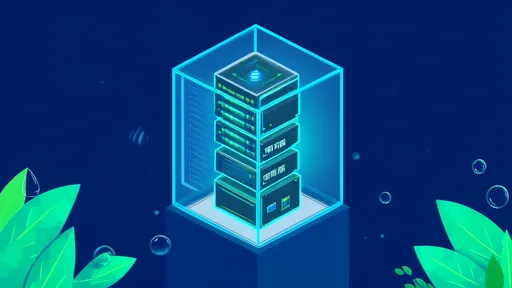
The sheer scale of energy required to process and store the world's data is staggering. Traditional data centers, housing thousands of servers running 24/7, have historically been voracious consumers of electricity, contributing significantly to carbon emissions. The shift to large-scale, distributed big data clusters, while efficient for computation, initially exacerbated this problem by multiplying the number of nodes in operation. This created a critical challenge: how to harness the power of big data without incurring an unsustainable environmental cost. The industry's response has been a multi-faceted approach targeting hardware, software, and architectural design.

At the hardware level, the most significant gains have come from a fundamental rethinking of processing units. While CPUs remain essential, the adoption of specialized hardware like GPUs (Graphics Processing Units) and TPUs (Tensor Processing Units) has dramatically increased computational efficiency for specific workloads, particularly AI and machine learning tasks. These processors can handle parallel operations far more effectively than general-purpose CPUs, completing complex calculations faster and using less energy per operation. Furthermore, the move towards low-power processors, often derived from mobile technology, for certain types of nodes within a cluster has yielded substantial savings. These chips sacrifice raw peak performance for exceptional energy efficiency, making them ideal for worker nodes handling less intensive tasks.

Complementing hardware advances are revolutionary changes in data center design and cooling. The old model of blast-chilling entire server rooms is being replaced by sophisticated, targeted cooling systems. Liquid cooling, once reserved for supercomputers, is becoming more mainstream, directly absorbing heat from components with far greater efficiency than air. Techniques like hot and cold aisle containment meticulously manage airflow to prevent the mixing of hot exhaust and cool supply air, drastically reducing the energy needed for climate control. Perhaps most innovatively, many companies are now situating data centers in naturally cold climates to leverage free-air cooling for much of the year, or are exploring ways to repurpose the waste heat generated by servers to warm nearby buildings.

On the software and architectural front, the focus is on doing more with less. The widespread adoption of virtualization and containerization technologies like Docker and Kubernetes has been a game-changer. By allowing multiple applications or services to run on a single physical server, these technologies dramatically increase hardware utilization rates. Instead of servers sitting idle for significant periods—a major source of energy waste—consolidated workloads ensure that the energy consumed is directly contributing to productive output. This principle of maximizing utilization is a cornerstone of green computing in big data.

Big data frameworks themselves have also evolved with energy efficiency in mind. Modern resource management tools, such as Apache YARN for Hadoop ecosystems, and orchestration platforms like Kubernetes, have become adept at intelligent workload scheduling and autoscaling. They can dynamically allocate tasks across the cluster based on current demand, spinning down entire nodes during periods of low activity and powering them back up when needed. This dynamic resource scaling ensures that the cluster's energy consumption closely mirrors its actual computational load, eliminating wasteful idling.

Data storage, a massive component of any cluster's footprint, is also undergoing a green transformation. The implementation of data tiering policies automatically moves less frequently accessed "cold" data from energy-intensive high-performance storage arrays to more efficient mediums, like high-density drives or even tape archives. Additionally, more aggressive data deduplication and compression techniques are employed to reduce the overall physical volume of data that needs to be stored and powered, directly cutting the energy required for storage infrastructure.

The role of Artificial Intelligence in optimizing energy use is becoming increasingly prominent. Machine learning algorithms are now being deployed to predict workload patterns, allowing for preemptive scaling of resources. More advanced AI systems can manage data center cooling in real-time, adjusting fan speeds, chilled water pump rates, and vent configurations based on live sensor data to achieve perfect cooling with minimal energy expenditure. This represents a move from static, pre-configured systems to dynamic, self-optimizing environments that continuously learn and improve their efficiency.

Beyond the technical solutions, a cultural and operational shift towards measuring and monitoring is critical. You cannot manage what you do not measure. The industry is increasingly adopting metrics like Power Usage Effectiveness (PUE) and its more nuanced successors to quantify efficiency. Comprehensive monitoring tools provide granular visibility into the power consumption of every rack, server, and even application, enabling engineers to identify inefficiencies and validate the impact of optimization efforts. This data-driven approach turns green computing from an abstract goal into a measurable, manageable operational parameter.

In conclusion, the journey towards sustainable big data computing is not reliant on a single silver bullet but on a holistic integration of strategies. It is the synergy between energy-sipping hardware, intelligent software, innovative cooling, and AI-driven management that delivers meaningful results. As the demand for data processing continues to grow, this commitment to green computing ensures that the industry's expansion is not at the expense of the planet. The future of big data is not just bigger and faster; it is smarter and greener, transforming clusters from power-hungry behemoths into models of efficiency and environmental responsibility.

Recommend Posts
IT

The Rise of Ransomware-as-a-Service (RaaS) and Countermeasures

By /Aug 26, 2025

The digital underworld has birthed a formidable new business model that is reshaping the cyber threat landscape: Ransomware-as-a-Service. What began as a specialized criminal endeavor requiring technical expertise has evolved into a commodified threat accessible to anyone with malicious intent and an internet connection. The emergence of RaaS platforms represents one of the most significant developments in cybercrime over the past decade, fundamentally altering how attacks are orchestrated and who can execute them.
IT

Practical Cases of Graph Databases in Anti-Fraud and Knowledge Graphs

By /Aug 26, 2025

The financial industry's battle against fraud has entered a new technological frontier, moving decisively beyond traditional rule-based systems and siloed data analysis. In this high-stakes environment, graph databases have emerged not merely as a tool, but as a foundational technology reshaping how institutions understand and combat sophisticated fraudulent networks. The inherent structure of graph technology, which focuses on the relationships between entities—be they people, transactions, devices, or locations—provides a uniquely powerful lens through which to detect patterns that would otherwise remain invisible in rows and columns of traditional databases.
IT

Secure Storage and Privacy Protection Schemes for Biometric Data

By /Aug 26, 2025

The rapid proliferation of biometric authentication systems has ushered in an era of unprecedented convenience and security across industries. From unlocking smartphones with a glance to accessing high-security facilities through iris scans, biometric data has become the cornerstone of modern identity verification. However, this technological advancement brings with it profound challenges related to data security and individual privacy. Unlike passwords or tokens, biometric characteristics are inherently inseparable from their owners—they cannot be changed if compromised. This immutable nature elevates the stakes for protecting such sensitive information against unauthorized access and misuse.
IT

Enhanced Analytics: Empowering Business Users with Self-Service Data Insights

By /Aug 26, 2025

The landscape of business intelligence is undergoing a profound transformation, driven by the emergence of augmented analytics. This evolution marks a significant departure from traditional data analysis methods, which often required specialized technical skills and created bottlenecks between data teams and business users. Augmented analytics leverages artificial intelligence and machine learning to automate data preparation, insight generation, and explanation, fundamentally changing how organizations derive value from their data assets.
IT

Automated Sharing and Application of Cyber Threat Intelligence (CTI)

By /Aug 26, 2025

The landscape of cyber threats continues to evolve at an unprecedented pace, compelling organizations to seek more dynamic and responsive defense mechanisms. In this context, the automation of cyber threat intelligence (CTI) sharing and application has emerged as a critical frontier in cybersecurity strategy. No longer can enterprises rely solely on manual processes; the volume, velocity, and variety of threats demand a paradigm shift toward integrated, machine-speed solutions. This transformation is not merely about adopting new tools but represents a fundamental rethinking of how intelligence is curated, disseminated, and operationalized across digital ecosystems.
IT

Maturity Assessment of Lakehouse Architecture

By /Aug 26, 2025

The evolution of data management has entered a new phase with the emergence of the Lakehouse architecture, a paradigm that seeks to unify the best aspects of data lakes and data warehouses. As organizations increasingly adopt this hybrid approach, the need to evaluate its maturity becomes paramount. A maturity assessment framework for Lakehouse architecture provides a structured way to gauge how well an organization is leveraging this model to drive value, ensure scalability, and maintain robustness in its data operations.
IT

Automated Response Practices in Security Operations Center (SOC)

By /Aug 26, 2025

In the ever-evolving landscape of cybersecurity, Security Operations Centers (SOCs) are increasingly turning to automation to enhance their defensive capabilities. The integration of Security Orchestration, Automation, and Response (SOAR) platforms has emerged as a transformative practice, enabling organizations to respond to threats with unprecedented speed and precision. As cyber threats grow in sophistication and volume, the traditional manual approaches to incident response are proving inadequate. SOAR addresses this gap by streamlining processes, reducing human error, and allowing security teams to focus on strategic tasks rather than repetitive, time-consuming actions.
IT

Progress in the Practical Application of Homomorphic Encryption: Performing Computations on Encrypted Data

By /Aug 26, 2025

In the rapidly evolving landscape of data security, homomorphic encryption has long been heralded as the holy grail—a cryptographic method that allows computations to be performed directly on encrypted data without ever needing to decrypt it. For years, it remained a theoretical marvel, confined to academic papers and considered computationally impractical for real-world applications. However, recent strides in algorithmic efficiency, hardware acceleration, and cloud infrastructure have thrust homomorphic encryption into the realm of practicality, promising to revolutionize how we handle sensitive data in an increasingly interconnected digital ecosystem.
IT

IoT Device Security Hardening Guide: From Hardware to Firmware

By /Aug 26, 2025

In the rapidly expanding universe of connected devices, the security of Internet of Things (IoT) ecosystems has emerged as a critical frontier for developers, manufacturers, and end-users alike. The journey toward robust IoT security is not a single step but a comprehensive process that begins at the most fundamental level: the hardware. A secure hardware foundation is indispensable; without it, no amount of software or network security can fully compensate for inherent vulnerabilities. This involves selecting microcontrollers and processors with built-in security features such as hardware-based cryptographic accelerators, secure boot capabilities, and trusted execution environments. These components create a root of trust, a secure starting point that ensures only authenticated code can execute, thereby preventing unauthorized firmware from running on the device.
IT

Green Computing in Big Data Clusters: Technologies and Practices for Reducing Energy Consumption

By /Aug 26, 2025

As global data consumption continues its exponential rise, the environmental footprint of massive data centers and computing clusters has become impossible to ignore. The push toward green computing in big data environments is no longer a niche concern but a central operational and ethical imperative for organizations worldwide. The convergence of technological innovation, economic pressure, and regulatory frameworks is driving a profound shift in how we power, cool, and manage the engines of our digital world.
IT

New Comparison of Real-Time Data Stream Processing Engines: Flink vs. Spark Streaming

By /Aug 26, 2025

In the rapidly evolving landscape of real-time data processing, two engines have consistently dominated conversations among data engineers and architects: Apache Flink and Apache Spark Streaming. While both frameworks offer powerful capabilities for handling streaming data, their underlying philosophies, performance characteristics, and suitability for different use cases continue to spark intense debate within the tech community. As organizations increasingly rely on real-time insights to drive decision-making, understanding the nuances between these platforms becomes critical.
IT

Automating Data Governance: AI for Discovering, Classifying, and Tagging Sensitive Data

By /Aug 26, 2025

In the rapidly evolving digital landscape, organizations are grappling with an unprecedented deluge of data. Amidst this data explosion, the protection of sensitive information has emerged as a critical priority. Regulatory frameworks such as GDPR, CCPA, and HIPAA have imposed stringent requirements, making robust data governance not just a best practice but a legal necessity. Traditional methods of data classification and protection, often manual and rule-based, are proving inadequate to handle the scale and complexity of modern data environments. They are slow, error-prone, and incapable of adapting to new types of sensitive data or evolving threats. This gap has catalyzed the emergence of a transformative solution: the automation of data governance through artificial intelligence.
IT

Cryptographic Agility: Preparing for the Post-Quantum Era

By /Aug 26, 2025

In the ever-evolving landscape of digital security, the concept of cryptographic agility has emerged as a cornerstone for future-proofing our digital infrastructure. As we stand on the brink of the quantum computing era, the need for adaptable cryptographic systems has never been more urgent. Quantum computers, with their potential to break widely used encryption algorithms like RSA and ECC, pose a significant threat to the confidentiality and integrity of data worldwide. Organizations and governments are now racing to develop and deploy quantum-resistant cryptographic solutions, but the transition is fraught with challenges. Cryptographic agility offers a pathway to navigate this complex transition smoothly, ensuring that systems can evolve without requiring complete overhauls every time a new threat emerges.
IT

Distributed Cloud: Extending Cloud Capabilities to Edge and Local Data Centers

By /Aug 26, 2025

The cloud computing landscape is undergoing a profound transformation, shifting from a centralized model to a more dispersed and context-aware architecture. This evolution, broadly termed Distributed Cloud, represents a strategic reimagining of how and where computing resources are deployed and managed. It moves beyond the traditional hyperscale data center model, pushing cloud capabilities—compute, storage, networking, and services—out to the physical edge of the network and into local data centers. This is not merely an incremental improvement but a fundamental change in the paradigm of cloud delivery, promising to address the growing demands for low latency, data sovereignty, and localized processing that the conventional cloud struggles to satisfy.
IT

Machine Learning Methods for Data Quality Management: Automatic Detection and Repair of Anomalies

By /Aug 26, 2025

In the rapidly evolving landscape of data-driven decision-making, the integrity of data has become paramount. Organizations across industries are increasingly relying on machine learning to not only derive insights but also to ensure the quality of the data feeding these sophisticated models. The automation of anomaly detection and repair represents a significant leap forward, moving beyond traditional manual methods to more efficient, scalable solutions.
IT

Common Pitfalls and Key Success Factors in Data Midend Construction

By /Aug 26, 2025

In the rapidly evolving landscape of digital transformation, enterprises are increasingly turning to data mid-platforms as a cornerstone for harnessing the power of their information assets. These platforms promise to break down data silos, enhance analytics capabilities, and drive innovation. However, the journey toward building an effective data mid-platform is fraught with challenges that can derail even the most well-intentioned initiatives. Understanding both the common pitfalls and the critical success factors is essential for organizations aiming to leverage their data for competitive advantage.
IT

Outlook on Key Technologies for 5G-Advanced: Integrated Sensing and AI-Native

By /Aug 26, 2025

The evolution of 5G technology continues to redefine connectivity, and the emergence of 5G-Advanced marks a pivotal shift toward more integrated and intelligent networks. Among the key technological prospects, the fusion of communication and sensing—often termed integrated sensing and communication (ISAC)—along with the native integration of artificial intelligence, stands out as a transformative force. These advancements are not merely incremental improvements but represent a fundamental rethinking of how networks operate, interact with the environment, and serve diverse applications.
IT

Defending Against Software Supply Chain Attacks

By /Aug 26, 2025

In recent years, the technology landscape has witnessed a dramatic surge in software supply chain attacks, a sophisticated form of cyber assault that targets not just individual applications but the entire ecosystem of development, distribution, and deployment. These attacks exploit the interconnected nature of modern software development, where third-party components, open-source libraries, and external services are seamlessly integrated into applications. The repercussions are far-reaching, compromising the integrity, security, and trust of software upon which businesses and consumers rely. As these threats evolve in complexity and scale, organizations must adopt a proactive and multi-layered defense strategy to safeguard their software supply chains.
IT

Application of Time-Series Databases in Predictive Maintenance for Industrial Internet of Things

By /Aug 26, 2025

In the rapidly evolving landscape of industrial operations, the integration of the Industrial Internet of Things (IIoT) has become a cornerstone for achieving unprecedented levels of efficiency and reliability. Among the myriad technologies enabling this transformation, time-series databases have emerged as a critical component, particularly in the realm of predictive maintenance. These specialized databases are engineered to handle the immense volumes of time-stamped data generated by sensors and machinery, providing the foundation for advanced analytics that can foresee equipment failures before they occur, thereby minimizing downtime and reducing operational costs.
IT

The Development and Challenges of Deepfake Detection Technology

By /Aug 26, 2025

The digital landscape is currently navigating the treacherous waters of deepfake technology, a double-edged sword that offers both innovative potential and unprecedented threats. As synthetic media generated by artificial intelligence becomes increasingly sophisticated, the race to develop effective detection mechanisms has intensified, becoming a critical frontier in the battle for information integrity. This technological arms race pits creators against detectors in a complex dance of advancement and countermeasure, with high stakes for security, privacy, and truth itself.