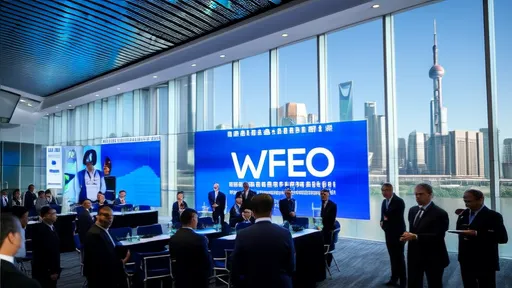
The bustling corridors of Washington's convention centers witnessed a significant convergence of technological minds this week as Southeast Asian and American leaders gathered for the inaugural ASEAN-U.S. AI Cooperation Forum. The atmosphere was thick with a palpable sense of opportunity, a feeling that this was more than just another diplomatic meeting; it was the forging of a crucial partnership for the technological century ahead.
Against a backdrop of escalating global competition in artificial intelligence, the forum represented a strategic move by both regions to establish a collaborative framework rather than a confrontational stance. Delegates from all ten ASEAN member states sat alongside their American counterparts, representing a combined population of over one billion people. The discussions, both in formal sessions and hushed conversations during coffee breaks, revolved around a shared vision: to harness AI's transformative potential while collaboratively navigating its profound challenges.
The geopolitical undercurrents of the forum were impossible to ignore. With other global powers aggressively advancing their own AI agendas, this partnership signals a deliberate effort to shape an alternative path—one rooted in democratic values, open markets, and inclusive growth. A senior U.S. State Department official, who preferred to remain anonymous, noted that the collaboration is not merely about keeping pace technologically but about defining the very rules of the road for the future of this powerful technology. The message was clear: the rules governing AI in the 21st century should not be written by a single nation or bloc.
Central to the dialogue was the theme of capacity building. There is a recognized asymmetry in AI development between the United States, home to many of the world's leading tech giants and research institutions, and the ASEAN region, which possesses immense digital potential but faces significant infrastructure and talent gaps. The forum served as a platform to launch several ambitious initiatives aimed at bridging this divide. A flagship program announced involves the establishment of a joint AI research and development fund, co-financed by public and private entities from both sides. This fund will specifically target cross-border projects focusing on areas of mutual interest such as climate-smart agriculture, medical diagnostics, and multilingual natural language processing.
Another key outcome was the commitment to creating a network of ASEAN-U.S. AI Excellence Centers. These physical and virtual hubs will be established in key ASEAN cities, serving as nodes for knowledge exchange, specialized training, and startup incubation. The goal is to cultivate a new generation of AI practitioners, ethicists, and policymakers within Southeast Asia, ensuring the region is not merely a consumer of AI technology but an active contributor and co-innovator. The first of these centers is slated to open in Singapore by the end of the next fiscal year, with others to follow in Vietnam, Indonesia, and Thailand.
The conversation around ethics and governance was particularly robust, reflecting a collective awareness of the societal risks associated with AI. Delegates spent considerable time debating frameworks for responsible AI, focusing on issues of bias, transparency, and accountability. There was a strong consensus on the need to develop standards that protect individual rights and promote social good, without stifling innovation. A joint task force was established to draft a set of "Guidelines for Trustworthy AI in the ASEAN-U.S. Context," a document intended to serve as a voluntary blueprint for companies and governments alike. This effort seeks to find a middle ground between the heavily regulated approach emerging in some jurisdictions and the more laissez-faire models elsewhere.
On the economic front, the forum highlighted the immense commercial opportunities that a deeper AI partnership presents. Southeast Asia's dynamic digital economy, with its rapidly growing middle class, offers a fertile testing ground and a massive market for AI-driven solutions. American tech firms are keen to adapt their products for the diverse and unique contexts of the ASEAN region. Conversely, ASEAN's burgeoning tech startups stand to gain unprecedented access to American capital, expertise, and global market reach. Memoranda of Understanding were signed between several ASEAN tech associations and U.S. industry groups to facilitate smoother technology transfer and joint venture formations.
Data, the lifeblood of AI, was another critical topic. Discussions tackled the complex challenge of enabling the cross-border data flows necessary for AI development while respecting national sovereignty and data privacy regulations. The forum produced a statement of intent to work towards a "Data Connectivity Accord," which would aim to create interoperable data protection standards and streamline data transfer mechanisms between the U.S. and ASEAN nations. This is a delicate balancing act, but participants expressed a firm commitment to finding practical solutions that allow data to fuel innovation without compromising on security or privacy.
Beyond the high-level policy talks, the forum dedicated significant attention to sector-specific applications. Panels explored how AI can revolutionize public health across Southeast Asia, from predicting disease outbreaks to personalizing telehealth services. In agriculture, AI-powered solutions for precision farming and supply chain optimization were discussed as vital tools for ensuring food security in the face of climate change. The potential for AI to enhance disaster management and humanitarian response in a region prone to natural catastrophes was also a key point of focus, with several pilot projects announced.
The ASEAN-U.S. AI Cooperation Forum has undoubtedly laid a substantial foundation. It has moved beyond vague declarations of intent to concrete plans, funded initiatives, and defined working groups. The real test, however, lies ahead. The success of this partnership will be measured not by the agreements signed in Washington, but by their implementation on the ground—in the research labs, startup incubators, and government agencies across Southeast Asia and the United States. The challenges of aligning diverse regulatory regimes, overcoming protectionist tendencies, and ensuring equitable benefits remain formidable.
As the curtains fell on the forum, there was a shared sense of purpose among the participants. They recognized that they are at the beginning of a long and complex journey. The collaboration born in Washington is a bold experiment in international technological diplomacy. If it succeeds, it could create a powerful model for how different regions of the world can come together to steer the course of a technology that will define all our futures. The work to turn this promising dialogue into tangible progress begins now.

By /Oct 21, 2025

By /Oct 21, 2025
By /Oct 21, 2025

By /Oct 21, 2025
By /Oct 21, 2025
By /Oct 21, 2025

By /Oct 21, 2025

By William Miller/Oct 20, 2025

By /Oct 20, 2025

By /Oct 21, 2025

By /Oct 20, 2025
By /Oct 21, 2025

By /Oct 20, 2025

By /Oct 20, 2025

By /Oct 21, 2025

By Joshua Howard/Oct 20, 2025

By /Oct 20, 2025

By /Oct 20, 2025

By /Oct 20, 2025

By /Oct 21, 2025