In a recent announcement that sent ripples across the aviation and technology sectors, a senior official from Dubai's Civil Aviation Authority (DCAA) boldly declared flying cars as "the future of transportation." This statement, made during an exclusive interview at the authority's headquarters, underscores the ambitious vision of a city already known for its futuristic skyline and relentless pursuit of innovation. The official, who spoke on condition of anonymity due to the sensitive nature of ongoing projects, emphasized that the era of urban air mobility is not a distant fantasy but an imminent reality being actively shaped by regulatory frameworks and strategic partnerships.
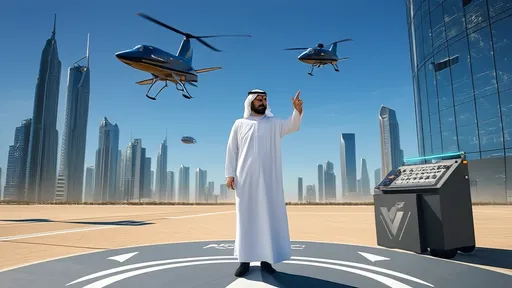
The concept of flying cars, once confined to the realms of science fiction, is rapidly transitioning into tangible prototypes and commercial ventures. Dubai has positioned itself at the forefront of this revolution, with the DCAA playing a pivotal role in crafting the necessary infrastructure and safety protocols. The official elaborated on the city's multi-phased approach, which includes the development of vertiports—specialized takeoff and landing zones—and the integration of air traffic management systems capable of handling low-altitude urban flights. This proactive stance is driven by the recognition that ground-based transportation networks are increasingly strained, and aerial solutions offer a viable alternative to alleviate congestion and reduce commute times.
Technological advancements are a cornerstone of this vision. The DCAA is closely collaborating with leading aerospace companies and startups to ensure that the flying cars entering Dubai's airspace meet the highest standards of safety, efficiency, and sustainability. Electric vertical takeoff and landing (eVTOL) vehicles are particularly favored, owing to their zero-emission profiles and relatively quiet operation, which are crucial for urban environments. The official highlighted several successful test flights conducted in collaboration with international firms, noting that these trials have provided invaluable data on vehicle performance, battery life, and operational reliability under various weather conditions.
Regulatory challenges, however, remain a significant hurdle. The DCAA is working tirelessly to establish a comprehensive legal framework that addresses airworthiness certification, pilot licensing, and liability issues. The official stressed that public acceptance is equally important, and the authority is launching awareness campaigns to educate residents about the benefits and safety measures associated with flying cars. "We are not just building vehicles; we are building trust," the official remarked, adding that transparent communication and rigorous testing are essential to garnering community support.
Economic implications are another critical aspect of this initiative. The introduction of flying cars is expected to spawn new industries, create high-skilled jobs, and attract substantial foreign investment. Dubai's strategy aligns with its broader economic diversification goals, reducing reliance on oil and cementing its status as a global hub for innovation. The official projected that within the next decade, urban air mobility could contribute billions to the local economy, with ripple effects across tourism, logistics, and real estate sectors. Early adopters are likely to include emergency services, luxury travel, and corporate transport, gradually expanding to mass-market applications as costs decrease and technology matures.
Infrastructure development is progressing at a remarkable pace. The DCAA has identified several key locations for vertiports, including atop skyscrapers, near major transportation hubs, and in suburban areas. These sites are being designed with seamless connectivity in mind, allowing passengers to transition smoothly between ground and air transport. The official revealed that blueprints for the first commercial vertiport are nearing completion, with construction slated to begin within the next two years. This facility will serve as a model for future installations, incorporating state-of-the-art security, energy-efficient designs, and passenger amenities that rival those of modern airports.
Environmental considerations are integral to the planning process. The DCAA is committed to ensuring that the adoption of flying cars does not come at the expense of Dubai's sustainability targets. Partnerships with renewable energy providers are being forged to power vertiports with solar and other clean sources, while vehicle manufacturers are being encouraged to use recyclable materials and develop advanced battery recycling programs. The official expressed confidence that urban air mobility, when implemented responsibly, could actually enhance environmental quality by reducing the number of ground vehicles and associated emissions.
Looking ahead, the DCAA envisions a fully integrated transportation ecosystem where flying cars coexist with autonomous ground vehicles, hyperloops, and traditional public transit. The official painted a vivid picture of a typical Dubai resident's commute in 2035: a short eVTOL flight from a vertiport near their home to one adjacent to their office, bypassing traffic entirely and completing the journey in a fraction of the current time. This vision, while ambitious, is backed by concrete plans and unwavering political will. The official concluded by reiterating that flying cars are not merely a technological novelty but a pragmatic solution to the growing challenges of urban mobility, and Dubai is determined to lead the world into this new era.
The DCAA's announcement has already sparked international interest, with several cities expressing intent to study Dubai's model. As the global race for urban air mobility accelerates, the emirate's proactive and holistic approach sets a benchmark for others to follow. The journey toward the future of transportation is fraught with complexities, but with strong leadership, cutting-edge technology, and a clear vision, Dubai is poised to turn science fiction into everyday reality.
By /Oct 21, 2025

By /Oct 21, 2025
By /Oct 21, 2025

By /Oct 21, 2025
By /Oct 21, 2025
By /Oct 21, 2025

By /Oct 21, 2025
By William Miller/Oct 20, 2025

By /Oct 20, 2025

By /Oct 21, 2025

By /Oct 20, 2025
By /Oct 21, 2025

By /Oct 20, 2025

By /Oct 20, 2025

By /Oct 21, 2025

By Joshua Howard/Oct 20, 2025

By /Oct 20, 2025

By /Oct 20, 2025
By /Oct 20, 2025

By /Oct 21, 2025