The year 2025 stands as a watershed moment in the chronicle of human technological advancement. The unveiling of the Top Ten Global Engineering Achievements offers more than a mere showcase of human ingenuity; it presents a profound and cohesive narrative of a world transitioning into a new paradigm of productivity. This is not a random collection of isolated breakthroughs, but a symphony of interconnected systems, each amplifying the other, collectively charting the definitive course for what economists and strategists now term New Quality Productive Forces. This emerging paradigm transcends the traditional metrics of output and efficiency, focusing instead on the radical reconfiguration of production itself, driven by intelligence, sustainability, and deep integration.
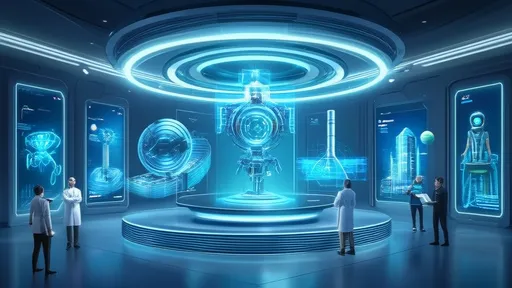
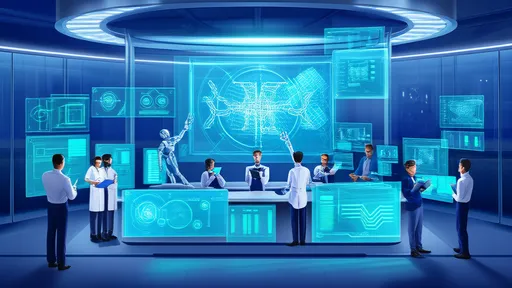
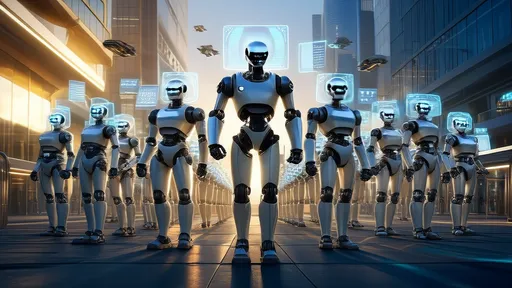
At the heart of this transformation lies the maturation of Pervasive Artificial Intelligence. We have moved decisively beyond AI as a tool for specific tasks. The achievement celebrated in 2025 is the seamless, ubiquitous integration of AI into the very fabric of industrial and social infrastructure. These are not just 'smart' factories; they are cognitive ecosystems. Production lines are now self-optimizing networks that predict maintenance needs, dynamically reallocate resources based on real-time global supply chain fluctuations, and autonomously design iterative improvements to their own processes. The role of the human worker has evolved from operator to orchestrator, focusing on strategic oversight, creative problem-solving, and managing human-AI collaboration. This shift represents a fundamental leap in productive quality, where value is generated not by the scale of labor, but by the intelligence of the system.
This intelligent core is given physical form and global reach through the next generation of Integrated Space-Ground Networks. The vision of a seamlessly connected planet is now an operational reality. This engineering marvel, a constellation of advanced low-orbit satellites interoperating with terrestrial 6G networks, provides a ubiquitous, high-fidelity data fabric. For productive forces, this is revolutionary. It enables the real-time, flawless coordination of autonomous transportation fleets across continents, the remote operation of precision machinery in hazardous environments from thousands of miles away, and the creation of a truly global, digital twin of Earth's industrial and natural systems. The friction of distance and the latency of information, long-standing constraints on productivity, have been virtually eliminated, creating a unified, responsive global workshop.
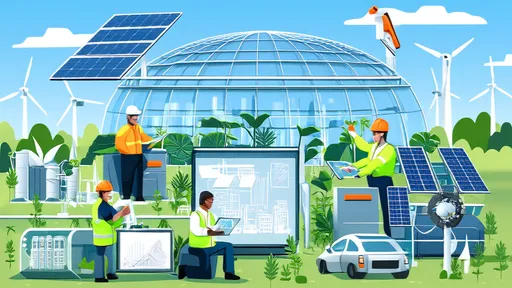
Underpinning this new intelligent and connected world is a radical transformation in energy, embodied by the Commercialization of Nuclear Fusion. After decades of promise, 2025 marks the point where fusion transitions from experimental to economically viable. The achievement is not merely the ignition of a star on Earth, but the engineering of stable, net-positive energy reactors that can be integrated into the grid. This provides the foundational power for the energy-intensive demands of AI data centers, advanced manufacturing, and desalination plants, all without carbon emissions. It decouples economic growth from environmental degradation, a cornerstone of New Quality Productive Forces. The productive capacity of a nation is no longer constrained by its fossil fuel reserves or its renewable energy potential, but by its ability to harness this virtually limitless and clean power source.
The material world itself is being reinvented through Programmable Matter and Smart Materials. This achievement moves us beyond creating materials with fixed properties. Engineers are now designing substances that can change their shape, density, or functionality in response to external stimuli or digital commands. Imagine aircraft wings that morph in flight for optimal aerodynamics, building materials that self-heal micro-cracks, or medical implants that dissolve after fulfilling their purpose. This drastically reduces waste, extends product lifespans, and enables a level of customization previously confined to the digital realm. It signifies a shift from subtractive, form-imposing manufacturing to additive, form-evolving creation, dramatically enhancing the quality and sustainability of physical goods.
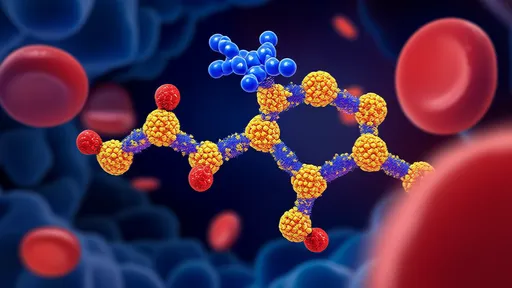
The biological frontier is equally transformative, with Synthetic Biology and Engineered Ecosystems redefining the very sources of production. This is not merely genetic modification; it is the rational design of biological systems from the ground up. We are seeing the rise of bio-factories where engineered microorganisms produce high-value chemicals, pharmaceuticals, and even construction materials from CO2 and industrial waste. Engineered ecosystems are being deployed to rehabilitate degraded lands and purify water sources, turning environmental liabilities into productive assets. This represents a profound qualitative shift: harnessing the logic of life itself as a manufacturing and restorative principle, creating a circular bio-economy that operates in harmony with the planet.
In the realm of health, the convergence of these forces is most personal and potent, demonstrated by the achievement of Personalized Regenerative Medicine. The era of one-size-fits-all treatment is over. The new paradigm involves 3D bioprinting of patient-specific tissues and organs, guided by AI analysis of individual genomic and proteomic data. This is production at the most fundamental human level. It moves healthcare from a reactive model of repairing damage to a proactive model of restoring and enhancing function. The productive force here is not just the technology, but the extension of healthy human lifespan and capability, which in turn fuels a more robust and innovative society.
The direction set by these 2025 achievements is unequivocal. New Quality Productive Forces are defined by several core principles. First is deep interconnectivity, where progress in one field, like fusion energy, directly enables and accelerates progress in another, like AI-driven manufacturing. Second is a fundamental shift from extractive to generative and restorative models, whether in energy, materials, or biology. Third is the primacy of information and intelligence over raw physical resource input as the primary driver of value. Finally, there is an overarching emphasis on resilience and adaptability, building systems that can anticipate and evolve with change rather than simply withstand it.
In conclusion, the 2025 Global Engineering Achievements do not simply present a list of new technologies. They collectively articulate a blueprint for the future of human production. The direction is towards a world where our systems are intelligent, our energy is clean and boundless, our materials are dynamic and sustainable, and our biology is programmable. This is the essence of New Quality Productive Forces—a future where economic advancement is intrinsically linked with environmental stewardship and human well-being, powered by an unprecedented synthesis of engineering brilliance.
By /Oct 21, 2025
By /Oct 21, 2025

By /Oct 21, 2025
By /Oct 21, 2025
By /Oct 21, 2025

By /Oct 21, 2025
By /Oct 21, 2025
By William Miller/Oct 20, 2025

By /Oct 20, 2025
By /Oct 21, 2025
By /Oct 20, 2025

By /Oct 21, 2025
By /Oct 20, 2025
By /Oct 20, 2025

By /Oct 21, 2025

By Joshua Howard/Oct 20, 2025
By /Oct 20, 2025

By /Oct 20, 2025

By /Oct 20, 2025
By /Oct 21, 2025